Ginger Fire Chase: India’s Fiery Folk Game of Speed & Camaraderie
A definitive exploration of one of India’s most endearing traditional games—its ancient roots, dynamic gameplay, regional diversity, and journey into the digital era
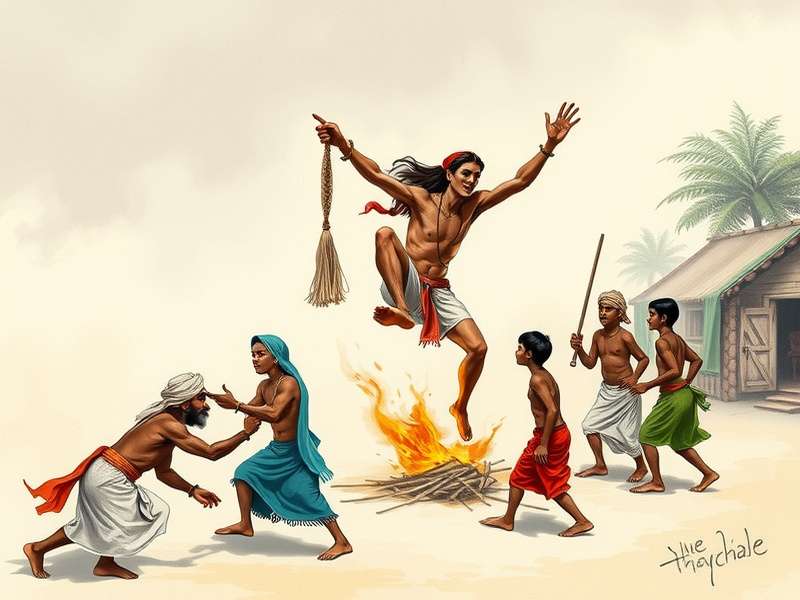
Step into any rural mela, festival pandal, or community ground across India, and you’ll be greeted by a spectacle of energy, laughter, and quicksilver movements—groups of children and adults alike darting around a circular boundary, their eyes fixed on a small, vibrant object at the center. This is the magic of Ginger Fire Chase, a game that has been the heartbeat of desi gatherings for centuries. More than just a pastime, it is a cultural institution, a way of passing down traditions, and a testament to the simplicity of joy that unites Indians across regions, languages, and backgrounds.
Ginger Fire Chase, known by various local names such as “Adrak Ki Aag Ki Daud” in Punjab, “Inji Veliyattam” in Tamil Nadu, and “Adaarer Agun Dordhho” in West Bengal, is a game that requires no expensive equipment, no complex setup, and no prior training. All you need is a fresh ginger root (the “fiery” centerpiece), a flat open space, and a group of people ready to engage in friendly competition. Its accessibility is one of the key reasons for its enduring popularity—from 5-year-old kids running around village haats to 60-year-old grandparents reliving their childhood, everyone can join in the fun.
At its core, Ginger Fire Chase is a game of strategy, agility, and teamwork. One player takes on the role of the “Fire Guardian,” tasked with protecting the ginger root placed in the middle of a circle. The rest are “Ginger Seekers,” whose mission is to sneak into the circle, grab the ginger, and escape without being tagged by the Guardian. The thrill lies in the cat-and-mouse chase, the split-second decisions, and the collective excitement as Seekers collaborate to distract the Guardian and make a successful run. It’s a game that teaches valuable life skills—quick thinking, teamwork, and graceful winning and losing—all while keeping players physically active.
What makes Ginger Fire Chase truly special is its deep connection to Indian culture and heritage. The choice of ginger as the game’s centerpiece is no coincidence—ginger holds a sacred place in desi life, used in cooking, medicine, and religious rituals. It is a crop that grows abundantly in rural India, making it easily accessible to all. Over the years, the game has evolved to reflect the unique traditions of each region, incorporating local customs, festivals, and even languages. In Punjab, it’s played with rangoli-marked circles and bhangra dance steps; in Tamil Nadu, flower petals define the boundary and Seekers bow to the Guardian as a sign of respect; in West Bengal, it’s intertwined with Durga Puja celebrations and folk songs. These variations are not just differences in gameplay—they are expressions of India’s rich cultural diversity.
In recent times, as urbanization and digitalization have changed the way Indians play and interact, Ginger Fire Chase has adapted to stay relevant. Thanks to initiatives by organizations like Daman Games, the game has found a new lease of life in the digital world, with mobile apps and online tournaments bringing it to a global audience. Yet, despite these modern adaptations, the essence of Ginger Fire Chase remains unchanged—it is a game that brings people together, celebrates tradition, and reminds us of the joy of simple, unfiltered fun.
🎮 Game Type
Traditional Folk Game, Outdoor Multiplayer, Action Game, Cultural Heritage Game, Team-Based Game
👥 Number of Players
3+ Players (Optimal: 5-15 Players for Maximum Engagement & Fun)
📍 Popular Regions
Pan-India (Punjab, Tamil Nadu, Uttar Pradesh, West Bengal, Kerala, Gujarat, Maharashtra, Rajasthan, Assam)
🎉 Occasions Played
Village Melas, Festivals (Baisakhi, Pongal, Navratri, Durga Puja, Holi, Diwali), Weddings, Community Gatherings, School Events
Throughout this comprehensive guide, we will delve deep into the world of Ginger Fire Chase—exploring its ancient origins, tracing its historical journey, detailing its gameplay and rules, examining its regional variations, and discussing its modern adaptations and cultural impact. We will also hear from players across India, who share their memories and insights about this beloved game. Whether you’re a lifelong fan of Ginger Fire Chase, a curious cultural enthusiast, or someone looking to learn more about India’s traditional games, this guide is your ultimate resource.
📜 History & Origins of Ginger Fire Chase
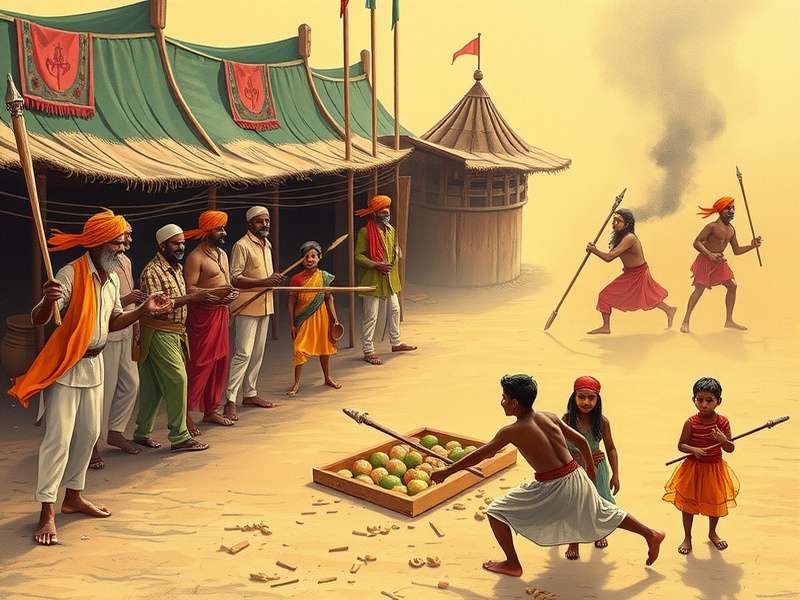
The history of Ginger Fire Chase is as old as India itself—rooted in the country’s rural traditions, oral histories, and ancient cultural practices. Unlike modern games with well-documented origins, Ginger Fire Chase has been passed down through generations via word of mouth, folk tales, and community gatherings. Its exact birth date is difficult to pinpoint, but historical evidence and literary references suggest that games with similar mechanics have been played in India for over 2,500 years.
One of the earliest references to a game resembling Ginger Fire Chase can be found in the Panchatantra, a collection of animal fables dating back to the 3rd century BCE. In the story “The Monkey and the Lion,” a group of monkeys devise a plan to steal fruit from a lion’s den—taking turns to distract the lion while one monkey grabs the fruit and escapes. This core mechanic—distracting a guardian to retrieve a valuable object—is identical to that of Ginger Fire Chase, leading historians to believe that the modern game evolved from such ancient pastimes.
Ancient Tamil literature from the Sangam period (300 BCE–300 CE) also provides crucial clues about the game’s origins. Poems in the Patirruppattu and Purananuru describe village children playing “veliyattam” (outdoor games) that involve chasing, grabbing objects, and evading a defender. These games were often played during harvest festivals and community gatherings, and were seen as a way to build physical strength, agility, and teamwork among young people. Many scholars argue that “veliyattam” is an early form of Ginger Fire Chase, with the ginger root later replacing other objects like fruit or stones due to its cultural significance and accessibility.
The Cultural Significance of Ginger in India
To understand the origins of Ginger Fire Chase, it’s essential to recognize the profound cultural significance of ginger in India. Ginger (known as “adrak” in Hindi, “inji” in Tamil, “adaa” in Bengali, “adu” in Gujarati, and “inchi” in Malayalam) has been an integral part of desi life for millennia. It is mentioned in ancient Ayurvedic texts like the Charaka Samhita (2nd century BCE) and Sushruta Samhita (1st century CE) for its medicinal properties—used to treat digestive issues, colds, inflammation, and even respiratory ailments. In religious rituals, ginger is offered to deities as a symbol of purity, prosperity, and vitality, and it is a staple ingredient in Indian cuisine, adding flavor and warmth to dishes across regions.
In rural India, where Ginger Fire Chase originated, ginger is a cash crop that grows well in most climates—from the fertile plains of Uttar Pradesh to the hilly regions of Himachal Pradesh. It is readily available in every household, making it the perfect object for a game where the objective is to grab and escape with the prize. Its bright orange color and distinct shape make it easy to spot, even in crowded spaces, and its firm texture ensures it doesn’t break easily during the chase. Over time, ginger became synonymous with the game, not just because of its accessibility, but also because of its cultural symbolism. To grab the ginger root in Ginger Fire Chase is to retrieve something valuable—something that represents health, prosperity, and the essence of desi life.
Medieval Period: Rise in Popularity & Regional Adaptation
During the medieval period (8th–18th centuries CE), Ginger Fire Chase grew exponentially in popularity across India, especially in rural areas where entertainment options were limited. It was often played at festivals like Holi, Diwali, Baisakhi, and Pongal, as well as at weddings, harvest celebrations, and village assemblies. The game served as a way to bring communities together, fostering social bonds, resolving minor disputes, and celebrating shared traditions.
Historical records from the Mughal era (16th–19th centuries) mention that folk games like Ginger Fire Chase were enjoyed by people of all classes—from village peasants to royal courtiers. The Mughal emperors, particularly Akbar and Jahangir, were known to organize folk game competitions in their courts, though the royal version of Ginger Fire Chase often used jewels, coins, or silk scarves instead of ginger roots (a luxury that rural villagers couldn’t afford). For the common people, however, the ginger root remained the centerpiece, as it was affordable, culturally meaningful, and readily available.
During this period, Ginger Fire Chase also began to develop distinct regional variations. As the game spread across India, each region adapted it to reflect local customs, traditions, and even climate. In Punjab, where bhangra dance is a cultural symbol, a bhangra step was added as a requirement for winning. In Tamil Nadu, where flower decorations are an integral part of festivals, the game’s boundary was marked with flower petals. In Kerala, where coconut trees are abundant, the ginger root was hidden under coconut shells to add an element of mystery. These adaptations not only made the game more engaging but also helped preserve local cultural practices, turning Ginger Fire Chase into a reflection of India’s diversity.
Colonial Era: A Symbol of Resistance & Cultural Preservation
The colonial period (18th–20th centuries) brought significant changes to India’s social and cultural landscape, but Ginger Fire Chase remained largely unaffected—at least in rural areas. Unlike Western sports like cricket, which were promoted by the British as a way to “civilize” Indians and enforce colonial values, Ginger Fire Chase was a rural game played primarily in villages, far from the reach of colonial authorities. As a result, it became a symbol of resistance—a way for Indians to hold onto their traditions and cultural identity in the face of foreign occupation.
During the independence movement (19th–20th centuries), Ginger Fire Chase took on an even deeper symbolic meaning. It was played at freedom rallies, satyagraha gatherings, and community meetings, with the ginger root representing India’s struggle for independence. The Fire Guardian symbolized colonial rule, and the Ginger Seekers represented the Indian people, working together to “retrieve” their freedom. This symbolic layer added to the game’s popularity, making it not just a pastime but a way to express national pride and unity.
Colonial officials often viewed folk games like Ginger Fire Chase with suspicion, seeing them as “uncivilized” or “disorderly.” There are records of British administrators attempting to ban such games in some regions, but their efforts were largely unsuccessful. Villagers continued to play Ginger Fire Chase in secret, using it as a way to preserve their culture and resist colonial oppression. In many ways, the game became a form of silent protest— a reminder that Indian culture could not be erased by foreign rule.
Post-Independence: Recognition & Promotion as Cultural Heritage
After India gained independence in 1947, Ginger Fire Chase was officially recognized by the government as an important part of the country’s cultural heritage. It was promoted in schools, community centers, and youth clubs as a way to encourage physical activity, teamwork, and cultural awareness among children. Many states organized inter-village, inter-district, and even inter-state competitions, further popularizing the game and highlighting its cultural significance.
In the 1950s and 1960s, the Government of India’s Ministry of Culture launched several initiatives to document and preserve traditional folk games like Ginger Fire Chase. Researchers and cultural anthropologists were sent to rural areas to record the game’s rules, variations, and cultural context, ensuring that these traditions were not lost to time. Ginger Fire Chase was also included in national cultural festivals and exhibitions, both in India and abroad, introducing it to a global audience.
However, in the late 20th century, as India underwent rapid urbanization and globalization, Ginger Fire Chase faced new challenges. The rise of television, video games, and digital devices led to a decline in outdoor play among children. Many urban kids had never heard of Ginger Fire Chase, let alone played it. Rural areas, too, saw a decline in traditional games as young people moved to cities for work and education, and Western sports like cricket and football gained popularity.
Despite these challenges, Ginger Fire Chase managed to survive, thanks to the efforts of cultural organizations, folk artists, and community leaders. These groups organized workshops, festivals, and competitions to keep the game alive, teaching young people how to play and explaining its cultural significance. In many villages, Ginger Fire Chase is still played at festivals and gatherings, passing from one generation to the next as a cherished tradition.
3rd Century BCE
References to games with similar mechanics to Ginger Fire Chase appear in the Panchatantra and other ancient Sanskrit texts.
300 BCE–300 CE
Sangam period Tamil poetry describes "veliyattam," an outdoor game that is an early form of Ginger Fire Chase.
8th–18th Centuries CE
Ginger Fire Chase grows in popularity across rural India, with distinct regional variations developing.
18th–20th Centuries CE
Ginger Fire Chase becomes a symbol of resistance during colonial rule, played at freedom rallies and community gatherings.
1947–1990s
Post-independence, the game is recognized as cultural heritage and promoted in schools and community centers, but faces decline due to urbanization.
2000s–Present
Resurgence of interest in traditional games, with Ginger Fire Chase adapted for digital platforms by organizations like Daman Games.
Today, Ginger Fire Chase stands as a testament to India’s cultural resilience. It is a game that has evolved with the times, adapting to changing social and technological landscapes while staying true to its roots. Its history is not just the story of a game—it is the story of India itself, a nation that has preserved its traditions while embracing change. As we move further into the digital age, Ginger Fire Chase continues to bring people together, reminding us of the power of simple, traditional games to foster connection, joy, and cultural pride.
🎯 Gameplay Mechanics: How to Play Ginger Fire Chase
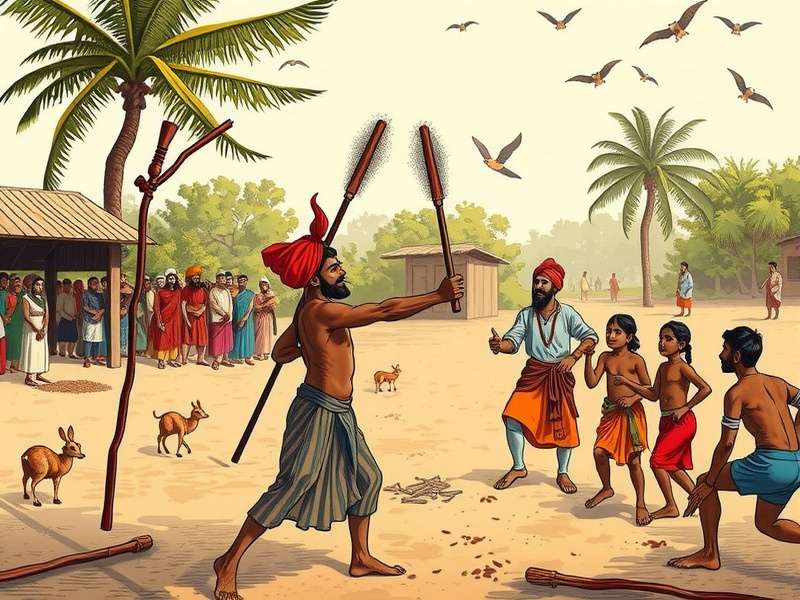
One of the greatest strengths of Ginger Fire Chase is its simplicity. Unlike modern video games or complex board games, Ginger Fire Chase requires no special skills, expensive equipment, or detailed instructions. It is a game that can be learned in minutes, but mastered over a lifetime. Below is a comprehensive guide to the traditional gameplay of Ginger Fire Chase, including setup, roles, step-by-step gameplay, strategies, and tips for a fun and fair game.
1. Preparation: Gather Players & Equipment
Ginger Fire Chase is a multiplayer game that works best with 5-15 players, though it can be played with as few as 3. The game is suitable for all ages—from young children to adults—making it perfect for family gatherings, festivals, and community events. There are no restrictions based on gender, skill level, or physical ability, which is part of its inclusive appeal.
Required Equipment:
- Ginger Root: A fresh, medium-sized ginger root (about 5-7 cm long) is ideal. It should be clean and free from bruises, with its skin intact. The ginger root is the “prize” of the game, and its bright orange color makes it easy to spot. If ginger is not available (for example, in urban areas where fresh ginger is not readily accessible), you can use other small objects like a tennis ball, wooden block, packet of candies, or even a small toy. However, using a ginger root adds an authentic desi touch and connects the game to its cultural roots.
- Boundary Markers: You’ll need something to mark the circular boundary of the game. Common options include chalk (for concrete or dirt surfaces), stones, flower petals, rangoli powder, turmeric powder, or even lines drawn in the dirt. The markers should be visible and easy to distinguish from the surrounding area. In rural India, natural markers like flower petals or stones are preferred, as they are readily available and add to the game’s traditional feel.
- Optional Prizes: While not required, prizes add to the fun and excitement of Ginger Fire Chase. Traditional prizes include laddoos, jalebi, gur (jaggery), small toys, handmade crafts, or even a packet of ginger! The prize is usually awarded to the winner of the game (the player who wins the most rounds). In some communities, the prize is shared among all players as a symbol of camaraderie.
Pro Tip: For a more authentic experience, use natural boundary markers like flower petals, stones, or turmeric powder. These are readily available in rural areas and add a touch of desi charm to the game. If playing in an urban area, chalk or rangoli powder works well and is easy to clean up!
2. Setup: Create the Game Area
Once you have your players and equipment, it’s time to set up the game area. Follow these steps for a perfect setup that ensures fairness and fun:
- Choose a Location: Find a flat, open space with no obstacles like rocks, holes, trees, or buildings. Ideal locations include village haats, panchayat grounds, school playgrounds, backyards, or festival pandals. The area should be large enough to accommodate the circle (10-15 feet in diameter) and the players standing outside it. Avoid playing on wet or slippery surfaces to prevent falls.
- Mark the Circle: The Fire Guardian (chosen in the next step) is responsible for marking the circle. The circle should be 10-15 feet in diameter—big enough for the Guardian to move around but small enough that they can keep an eye on the ginger root. Use your boundary markers to draw the circle, ensuring that it is as round as possible. The boundary should be clear and easy to see, so players know exactly where the circle begins and ends.
- Place the Ginger Root: Put the ginger root in the exact center of the circle. Make sure it is visible and easy to grab—no hiding it under leaves or dirt (that’s cheating, bhai!). The ginger root should be placed on a flat surface so that it doesn’t roll away. In some regional variations, the ginger root is placed on a banana leaf, coconut shell, or piece of cloth to keep it clean and stable.
- Position the Players: The Fire Guardian stands inside the circle, near the ginger root. The remaining players (Ginger Seekers) line up outside the circle, evenly spaced around its perimeter. Seekers should be at least 2 feet away from the boundary to avoid accidental entry before the game starts. This ensures a fair start for everyone.
3. Choosing the Fire Guardian
The Fire Guardian is a crucial role in Ginger Fire Chase, as they are responsible for defending the ginger root and keeping the game fair. Choosing the right player for the job is important, and there are several traditional ways to select the Guardian:
- Stone-Paper-Scissors: All players gather in a circle and play stone-paper-scissors. The last remaining player becomes the Fire Guardian. This is a popular method because it is fair and quick, and everyone gets to participate.
- Volunteering: Players can volunteer to be the Fire Guardian. This is a good option if someone is eager to take on the role or if there’s a player who enjoys being in charge. Volunteering also encourages leadership and sportsmanship.
- Age-Based Selection: In some communities, the oldest player becomes the Fire Guardian, as a sign of respect for their experience and wisdom. This is a traditional practice that reinforces cultural values of respect for elders.
- Random Selection: Write players’ names on pieces of paper, fold them up, and pick one at random. This is a fair way to select the Guardian if no one volunteers or if stone-paper-scissors results in a tie.
- Previous Winner: In some cases, the winner of the previous round becomes the Fire Guardian for the next round. This is a fun way to keep the game moving and give everyone a chance to play different roles.
Once the Fire Guardian is chosen, they get a few minutes to familiarize themselves with the circle and adjust the boundary markers if needed. The Ginger Seekers can use this time to plan their strategy, discuss how to work together, and get excited for the game to begin!
4. Gameplay: Let the Chase Begin!
Now that everything is set up, it’s time to start the game! Here’s how Ginger Fire Chase unfolds, step by step:
- Start the Game: The Fire Guardian stands in the center of the circle, facing the Ginger Seekers. They shout “3, 2, 1, Jaldi! (Quick!)” to signal the start of the game. Alternatively, they can clap their hands three times, blow a whistle, or say a traditional phrase in the local language—whatever works best for the group. The key is to ensure that everyone starts at the same time.
- Seekers’ Turn to Attack: The Ginger Seekers rush towards the circle, trying to sneak in and grab the ginger root. They can enter the circle from any direction—front, back, sides—but they have to be quick and careful, as the Fire Guardian is watching every move! Seekers can enter one at a time or in groups, depending on their strategy.
- Guardian’s Job to Defend: The Fire Guardian’s main goal is to protect the ginger root by tagging the Ginger Seekers. They can move freely inside the circle, running, spinning, and dodging to keep the Seekers away. However, the Guardian cannot step outside the circle—if they do, any Seeker inside the circle is safe and can grab the ginger root without being tagged. If a Seeker is tagged by the Guardian while inside the circle (before grabbing the ginger), they are out of the round and have to stand on the sidelines until the next round starts.
- Grab and Escape: If a Ginger Seeker manages to grab the ginger root, they have to run back outside the circle as quickly as possible. The Fire Guardian can chase them, but only within the circle—once the Seeker steps outside the boundary, they are safe. The Seeker must hold onto the ginger root until they are fully outside the circle; if they drop it, they have to go back and grab it again (if they can do so without being tagged).
- Win the Round: If the Seeker escapes the circle with the ginger root, they win the round. They become the new Fire Guardian for the next round, and the game restarts with a fresh setup. If the Fire Guardian tags all the Seekers before any of them can grab the ginger root, or if the 5-minute time limit runs out, the Guardian wins the round and gets to keep their role for the next game.
- Play Multiple Rounds: Ginger Fire Chase is usually played in multiple rounds (3-5 rounds, depending on how much time you have). The overall winner is the player who wins the most rounds—either by grabbing the ginger as a Seeker or by defending it as a Guardian. In some communities, the winner is also required to perform a traditional dance, recite a folk song, or share the prize with the other players.
Desi Tip: Keep the game friendly and inclusive! If a young child is playing, make the circle smaller, give them a head start, or let them grab the ginger root without being tagged. If someone is new to the game, explain the rules gently and help them get started. Remember, the goal is to have fun, not just to win—so laugh, cheer, and enjoy the chase!
5. Strategy: How to Win at Ginger Fire Chase
While Ginger Fire Chase is a game of speed and agility, it also requires strategy and teamwork. Here are some tips for Ginger Seekers and Fire Guardians to increase their chances of winning, based on traditional wisdom passed down through generations:
For Ginger Seekers:
- Work as a Team: Teamwork is the secret to success in Ginger Fire Chase. Seekers should collaborate to distract the Fire Guardian. For example, one Seeker can fake a charge to the left, drawing the Guardian’s attention, while another Seeker sneaks in from the right to grab the ginger. Communication is key—shout instructions to each other, point out openings, and coordinate your moves. Remember, “ek saath kaam karo, jeet paoge!” (Work together, you’ll win!)
- Be Quick and Agile: Move fast, but don’t be reckless. Dart in and out of the circle, change direction suddenly, and use your body to shield yourself from tags. Keep your eyes on the ginger root at all times, but also watch the Guardian’s movements to anticipate their next move. The best Seekers are those who can think on their feet and react quickly.
- Timing is Everything: Wait for the right moment to make your move. If the Guardian is distracted by another Seeker, that’s your chance to sneak in. Don’t rush in too soon—patience can pay off. Watch the Guardian’s breathing, body language, and focus—when they’re tired or distracted, that’s when you strike!
- Use the Element of Surprise: Try different entry points to keep the Guardian guessing. If everyone is attacking from the front, circle around to the back and make your move when the Guardian least expects it. You can also fake a retreat to lull the Guardian into a false sense of security, then dart back in to grab the ginger.
- Stay Low and Light: Bend your knees slightly and keep your center of gravity low—this makes you more agile and harder to tag. Avoid running in straight lines; instead, zigzag to make it harder for the Guardian to catch you. Light footsteps will also help you move quietly, making it easier to sneak into the circle.
For Fire Guardians:
- Stay Alert and Focused: Keep your eyes on all Ginger Seekers at once. Spin around frequently to check all directions, and don’t focus too much on one Seeker—others may use the opportunity to sneak in. Stay calm and don’t get distracted by fake charges or taunts. Remember, “dhyan rakhna, jeet paoge!” (Stay focused, you’ll win!)
- Protect the Ginger Root: Position yourself near the ginger root, but don’t stand too close—this can make you predictable. Move around the ginger, keeping it between you and the Seekers. If a Seeker gets close to the ginger, prioritize tagging them over chasing other Seekers—protecting the ginger is your main goal.
- Use Fake Moves: Trick the Seekers by pretending to tag one player while actually going for another. For example, look like you’re going to tag a Seeker on the left, then quickly turn around and tag a Seeker on the right who’s trying to sneak in. This keeps the Seekers on their toes and makes it harder for them to plan their moves.
- Control the Circle: Use your body to block entry points and limit the Seekers’ access to the ginger. If a Seeker enters the circle, tag them quickly before they can reach the ginger. Don’t chase Seekers all the way to the edge of the circle—this leaves the ginger unprotected. Instead, stay within the center area and defend the ginger from there.
- Conserve Energy: Don’t waste energy running around the circle unnecessarily. Move only when needed, and use short bursts of speed to tag Seekers. If you’re tired, slow down and focus on defending the ginger—you don’t need to tag every Seeker, just the ones who get close to the ginger.
6. Variations in Gameplay (Beyond the Basics)
While the core gameplay of Ginger Fire Chase remains the same across India, there are several variations that add excitement and challenge to the game. These variations are often used to make the game more interesting for experienced players or to adapt it to different group sizes:
- Team Play: Divide the Ginger Seekers into two teams. Each team takes turns trying to grab the ginger root, and the team with the most wins after a set number of rounds is declared the overall winner. Team play encourages more collaboration and strategy, and is great for larger groups.
- Multiple Ginger Roots: Add two or three ginger roots to the circle. The Fire Guardian has to defend all of them, and the first Seeker to grab any ginger root and escape wins the round. This variation is faster-paced and more chaotic, making it perfect for energetic groups.
- Blindfolded Guardian: Blindfold the Fire Guardian (with their consent) to make the game more challenging. The Guardian has to rely on sound to locate the Seekers, while the Seekers have to move quietly to grab the ginger. This variation is great for older players and adds an element of suspense.
- Time-Limited Rounds: Shorten the round time to 3 minutes instead of 5. This makes the game faster-paced and more intense, as Seekers have less time to plan and execute their moves. It’s a good variation for groups with limited time.
- Obstacle Course: Add simple obstacles like chairs, stones, or ropes to the circle. Seekers have to navigate around the obstacles to reach the ginger root, while the Guardian has to defend the ginger and navigate the obstacles too. This variation adds a physical challenge and makes the game more interesting.
“
I’ve been playing Ginger Fire Chase since I was 6 years old—my dad taught me how to play at a village mela in Uttar Pradesh. What I love most about the game is the teamwork. My friends and I would plan for hours before each round, figuring out how to distract the Guardian and grab the ginger. We’d laugh so hard when someone fake-charged and the Guardian fell for it! Even now, when I go back to my village for Diwali, we still gather to play. It’s not just a game; it’s a way to connect with my roots and my friends. The best part? No matter how old we get, we still act like kids when we play—running, laughing, and chasing each other like there’s no tomorrow.
Whether you’re playing in a village haat, a festival pandal, or your backyard, Ginger Fire Chase is a game that promises hours of fun and excitement. Its simple gameplay, cultural significance, and focus on teamwork make it a beloved pastime for Indians of all ages. So gather your friends and family, grab a ginger root, and let the chase begin—you’re sure to create memories that will last a lifetime!
📏 Rules & Etiquette: Fair Play in Ginger Fire Chase
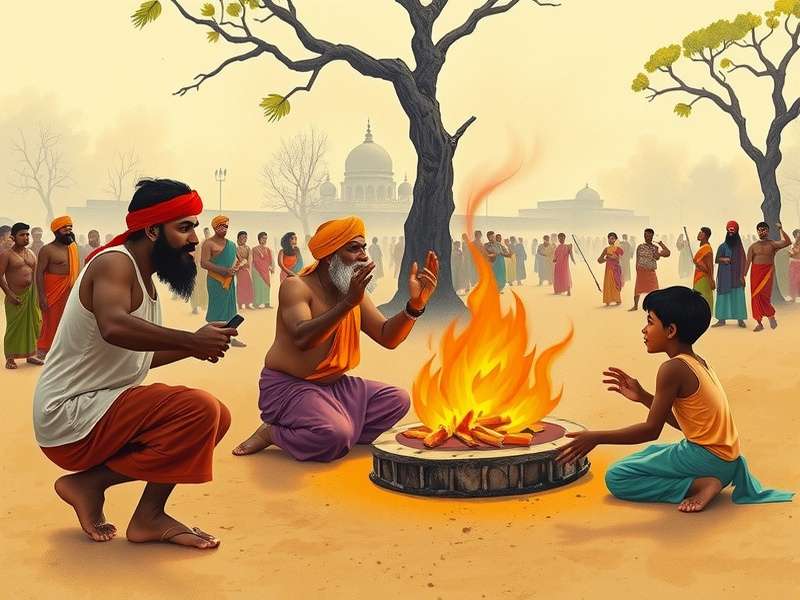
While Ginger Fire Chase is a fun and casual game, it has a set of core rules that ensure fair play, safety, and respect for all players. These rules have been passed down through generations and vary slightly by region, but the fundamental principles remain the same. Following these rules not only makes the game more enjoyable but also teaches players important values like sportsmanship, respect, and teamwork—values that are deeply ingrained in Indian culture.
Core Rules (Applicable Across All Regions)
These are the basic rules that every player of Ginger Fire Chase should know. They are designed to keep the game fair, safe, and fun for everyone involved:
- No Tagging Outside the Circle: The Fire Guardian can only tag Ginger Seekers who are inside the circle. If a Seeker is standing outside the circle, even if they’re just inches away, the Guardian cannot touch them—so Seekers can take their time to plan their move before entering. If the Guardian tags a Seeker outside the circle, the Seeker is not out, and the game continues as normal. This rule ensures that Seekers have a safe zone to plan their attacks.
- No Holding or Hiding the Ginger Root: The Fire Guardian’s job is to defend the ginger root by tagging Seekers, not by holding it or hiding it. If the Guardian picks up the ginger root, hides it under their clothes, covers it with dirt/leaves, or moves it from the center of the circle, the round is restarted. The ginger root must remain in the center of the circle at all times, visible and easy to grab. This rule ensures that the game is fair and that Seekers have a clear target.
- No Pushing or Shoving: Ginger Fire Chase is a friendly game—physical aggression is strictly prohibited. If a Seeker pushes, shoves, hits, or trips the Guardian (or vice versa), the offending player is automatically out of the round. In some communities, repeated aggression can result in being banned from the game entirely. This rule prioritizes safety and respect for all players.
- Tagged = Out: If a Ginger Seeker is tagged by the Fire Guardian while inside the circle (before grabbing the ginger root), they are out of the round. They